New season starting

After yet another inspiring Summer seminar in England (some photos below), we’re starting new season. Absolute beginners and all levels of fitness are welcome.

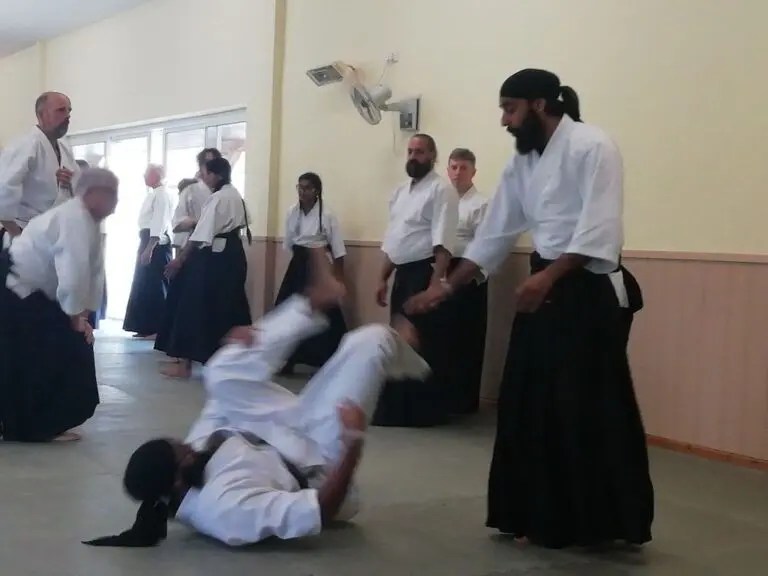
Ki Aikido consists of exercising with a partner, and all the movements come naturally within the individual’s physical limits. These exercises simulate problems in daily life. We learn that force and aggression are useless in dealing with a partner who is holding you. Physical strength is of no consequence in Ki Aikido.

The unique principles in this art are directly applicable to our daily lives. They give us a practical method of dealing with many problems that we may face.

First prize, new Dan Grades

Please don’t miss the August update on the Ki Federation website:

“… We had plenty of laughs on our fancy dress evening again. The prize for the funniest costume went to Dimitri and family, over from Canada. They paraded by, banging a gong and calling “Bring out your dead”. The body in the cart kept insisting that he was getting better!…”

Translation for our North American readers: as per Cambridge dictionary, fancy dress is a costume.

New season

We are back from excellent Summer Seminar’2024, full of new learning an inspiration. Seeing Sensei Williams at 90+ years of age demonstrating what can be achieved with KI was amazing.

No photographs this time because photographing Aikido is like photographing music – one sees musicians, but not the music.

Practice of Ki Aikido is very accessible, please read blog to make your own opinion. As the mental pressures in modern society are on the rise it is increasingly important to take care of oneself and develop calmness and “living relaxation”.

Beginners are welcome on the mat, all levels of fitness.

Aikido is for everyone. – Sensei Williams

Ki Aikido and Anxiety

A lot of us experience anxiety and even panic attacks in spite of “doing the right thing” and “taking care of ourselves”. Many turn to martial arts for solution. After all, teachers and instructors are looking so capable and self-assured on promotional videos. Students hope that learning how to defeat opponents and protect themselves will one day lead them to the same state.

Generally in our daily life fighting and physical conflict is only one of the sources of anxiety and for many of us not even the main one. Financial statements and bills don’t have fists, but can surely pack a punch. Power of social media posts or even simple likes/dislikes is well-known. Most of us are not physically fighting colleagues, customers or competitors, but professional environment is hardly a peaceful one.

The reason our attempts to eliminate anxiety in daily life fail even after extensive training is that the focus of training remains on particular movements. It is important to use movements not as a goal, but as a means to change our reaction to problems in daily life.

Ki Aikido movements are not techniques as such, but specially designed movements to reach deep and improve our spontaneous reactions to problems. Attacking partner presents a problem which creates a reaction and by performing correct movements we train our minds for correct positive action. As the training progresses the problems are coming fast and unexpectedly, same as they come in daily life. This test our spontaneous reactions to the unexpected. Our spontaneous motor reactions are the best test of our minds.

Over the years Ki Aikido practice has proven its effectiveness in reducing stress and eliminating anxiety. We find ourselves in situations which we could not even imagine as possible for us. Instead of anxiety and fear our mind reacts in a positive and calm manner. Anxiety loses its grip on us.

Coping skills through Ki Aikido

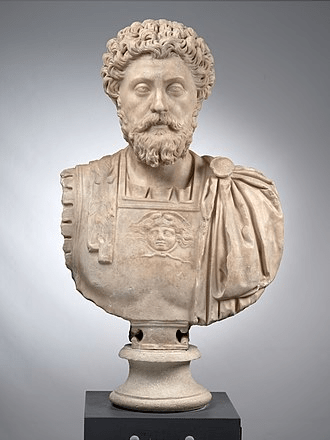
The art of living is more like wrestling than like dancing, in that it stands ready for what comes and is not thrown by the unforeseen.

Marcus Aurelius. Meditations, VII, 61

Here one of the most profound thinkers of Western Civilization contrasts ‘improvisation’ wrestling with a choreographed dance.

In Ki Aikido the purpose of practice is to train the mind to cope with unexpected events in our life. Multiple partners’ attack represents problems in the daily life that come to us from all sides and are quite unforeseen. Through Ki Aikido exercises we learn ‘to stand ready … and not be thrown’ by such overwhelming attack in a quite a literal sense. This teaches students coping skills most relevant for modern life. The ‘art of living’ as Marcus Aurelius would have said.

Great progress: story behind a photo

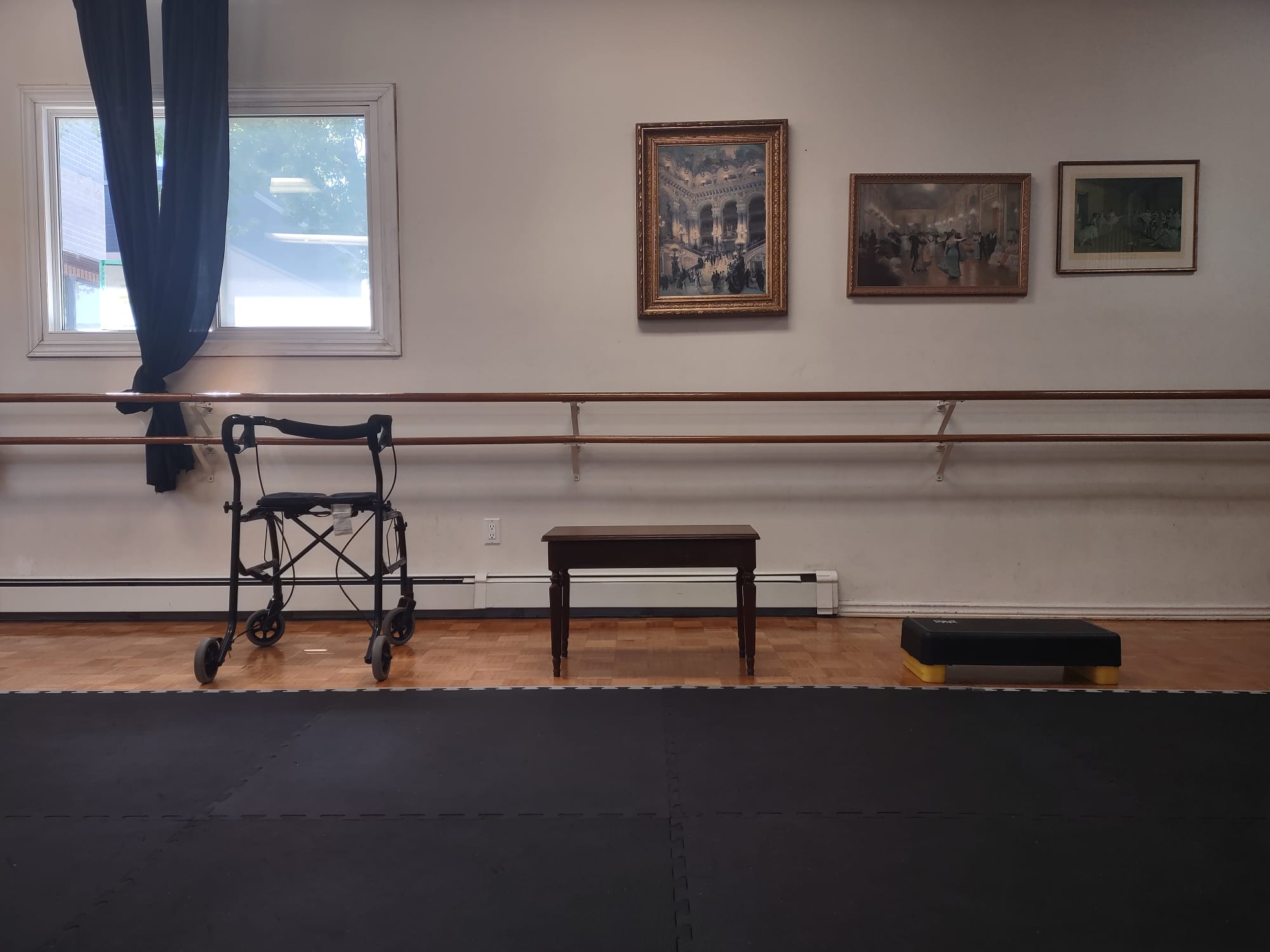
This photo might not make much sense at a first glance, but there’s a great story behind it. About nine months ago a gentlemen came to our club with a walker (on the left) and a history of brain injury and asked to join.

He joined and started with Ki Development and Ki for Health exercises – the ones all beginners in Ki Aikido are going through. Of course they would have to be tailored to his needs a bit. He would leave his walker by the side of the mat and use it for frequent rests as well as a very high support for some exercises. As he improved he started leaving his walker in the changing room and used a piano stool (centre). He could do exercises with lower support and could sit on a lower sit – a progress undoubtedly. Eventually he has built enough dynamic balance to start Ki Aikido exercises. Recently we replaced the stool with the stepper (right). The progress he has made has been amazing and proves once again what can be achieved through practice of Co-ordination of mind and body.

As to the other objects in the photo – we practice in an old ballet studio, hence parquet floor, bars and pictures on the walls.

We’re almost off to a Summer break, will resume classes at the end of August.

The hardest part of Aikido practice

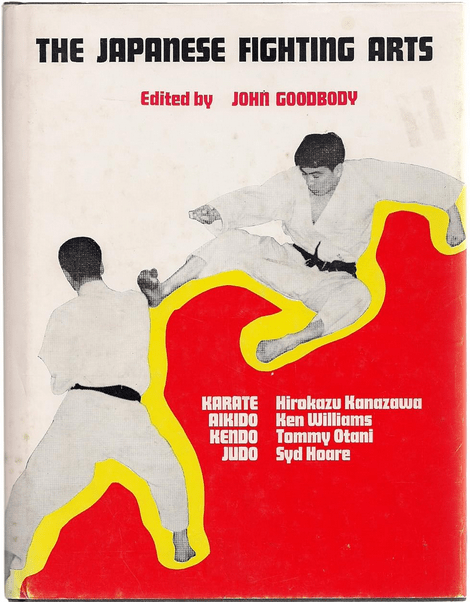
I chanced upon a copy of a 1969 book to which Sensei Williams has contributed a chapter on Aikido. I thought that this quote could be encouraging for those making up their mind to come to a class.

It is not so much the practice that is the difficult part but the getting down to the club. For instance, the pupil may return from work on a cold evening, have his dinner and afterwards sit by the fire.
It is one of the hardest things to get oneself out of the chair and to get down to the club for training. This is where the mind must be strong and control the body. This dedication is a part of the training and discipline which must go with Aikido.

Sensei Williams

We know that getting out of a chair is hard and you are not alone in this. Hope this is encouraging. It’s up to you now…

How do I begin …

Our classes are mixed-grade, beginners are practicing on the same mat as higher grades, but in our classes all beginners go through a staggered process that allows them to start enjoyably and safely. There is a sequence of movements, exercises and Ki tests that everyone is going through as they start. Students move through them in their own time.

This ensures that all important points and movements are covered. In the long run such slower start ends up being the fastest route to mastery.

The Artist’s Way. Audacity.

All too often, it is audacity and not talent that moves an artist to center stage.

– Julia Cameron, The Artist’s way

One of the objectives in the practice of Ki Aikido is “to eliminate the fear of living”. This refers to that feeling of performance anxiety and overthinking ever-present in our lives. It gets noticeable in situations of stress and/or high-stakes, but if one is observant with self – it is ever-present.

Practice of Ki Aikido is designed to replace this feeling with the positive flow. This attitude taps into vast potential of our minds while respecting the natural limitations of our bodies. Audacity is one of the consequences of the practice of “co-ordination of mind and body”.